
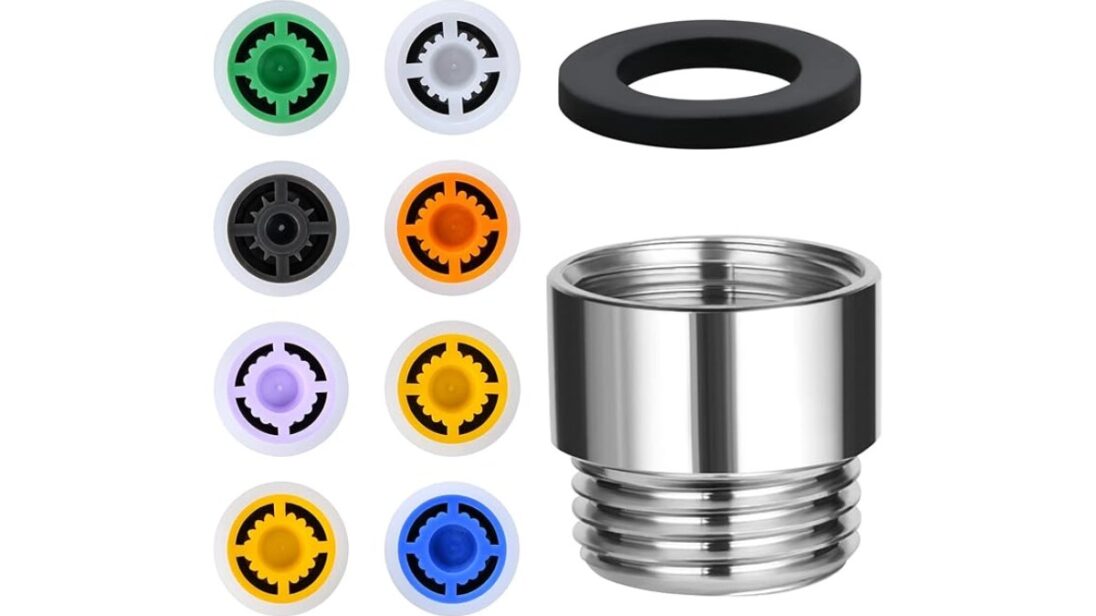
A shower head regulator is a simple device that controls how much water flows out of the shower head, giving you a consistent rate while saving both water and the energy needed to heat it. For any commercial property, this is a must-have tool for keeping operating costs in check. It works by capping the gallons per minute (GPM) without your tenants or guests noticing a real drop in performance.
Why Shower Head Regulators Are Essential for Your Business
If you’re a facility manager, property owner, or contractor, you know that rising utility costs are a constant headache. In places like hotels, apartment complexes, gyms, and universities, water use is a huge chunk of the operational budget.
A shower head regulator isn’t just a small gadget; it’s a key piece of infrastructure for getting that spending under control. Think of it as a smart, strategic investment that pays you back by directly lowering your utility bills and helping you meet sustainability goals.
The whole point of this technology is to precisely manage the water flow rate. By installing regulators, you can lock in serious savings without sacrificing the shower experience people expect. For anyone managing a large-scale plumbing system, this is a game-changer—those small efficiencies really add up to major financial wins.
The Growing Market for Water Conservation
The push for water efficiency isn’t just a local trend; it’s a global movement. The shower head market, which is packed with systems that have built-in flow regulators, was valued at around USD 8 billion in 2023 and is expected to rocket past USD 16 billion by 2032.
What’s driving this? Massive construction booms and tougher conservation mandates. For property managers, this signals a clear opportunity. Making the switch to regulated low-flow shower heads can deliver immediate savings, cutting water usage by up to 50% compared to older, wasteful models. You can explore more data on the global shower head market to see these trends for yourself.
When you standardize the flow rate across hundreds or even thousands of units, you get rid of the guesswork. No more wildly fluctuating water use. Instead, you get predictable, lower utility bills every single month. That kind of control is fundamental to smart budget management in any large facility.
Key Benefits for Commercial and Multifamily Properties
Putting a shower head regulator program in place delivers a return on your investment from multiple angles. The perks go way beyond just a lower water bill—we’re talking energy savings, less maintenance, and better long-term asset value. For any business focused on efficiency, these devices are a low-cost, high-impact upgrade.
Here’s what you get:
- Reduced Water Consumption: This is the big one. You’re directly cutting the volume of water used in every single shower.
- Lower Energy Costs: Simple math: less water used means less water to heat. That translates to a significant drop in your natural gas or electricity bills.
- Consistent Guest Experience: Pressure-compensating regulators keep the flow steady and satisfying, even when everyone in the building decides to shower at the same time.
- Enhanced Sustainability Profile: Showing a real commitment to the environment can boost your brand’s reputation and attract eco-conscious tenants and guests.
How Regulators Master Water Flow and Pressure
To really get why a shower head regulator can save so much money, it helps to peek behind the curtain and see what’s actually happening with your water. At its core, this little device is managing two huge forces in your plumbing system: water flow and water pressure. Nailing the balance between these two is the secret sauce to incredible efficiency without anyone complaining about a weak shower.
Think of your building’s plumbing like a highway. Water is the traffic, and the goal is to keep everything moving smoothly without jams or waste. An old, unregulated shower head is basically a highway with no speed limits or lane markers—letting a chaotic, wasteful amount of water stampede through all at once.
A simple flow restrictor, which is the most basic kind of control, acts like a permanent roadblock. It’s usually just a small plastic or metal disc with a tiny hole that physically chokes off how much water can get through. While it definitely cuts down on the volume, its performance is totally at the mercy of the building’s water pressure at that exact moment.
The Smart Approach: Pressure Compensation
This is where a modern shower head regulator completely changes the game. Instead of a fixed roadblock, imagine it as a smart, automated traffic control system. This technology is called pressure-compensating. Inside, there’s an intelligent valve—often a flexible diaphragm—that reacts and adjusts in real-time to any changes in water pressure.
This is an absolute must-have in places like hotels, apartment buildings, and gyms. Picture a hotel during the morning rush hour. When dozens of showers kick on at the same time, the building’s overall system pressure can take a nosedive.
With simple flow restrictors, that pressure drop means the showers on the top floors suddenly feel pathetic and weak. But a pressure-compensating regulator senses that drop and automatically widens its internal opening just enough to keep the flow rate steady and satisfying for every single user.
Translating Tech Specs into Real-World Metrics
To figure out what’s going on with your system, you only need to know two key numbers. These aren’t just technical jargon; they’re the metrics that tie directly to your bottom line.
-
GPM (Gallons Per Minute): This is your flow rate—it’s how much water a fixture is dumping out every minute it’s on. Old, wasteful shower heads can guzzle 4.0 GPM or even more. Modern, high-efficiency models equipped with regulators can deliver a great shower at 1.5 GPM or less. Driving down the GPM is the number one goal for any water conservation effort.
-
PSI (Pounds per Square Inch): This measures water pressure, which is the force pushing the water through your pipes. While high PSI might sound like a good thing, when it’s too high it can damage your fixtures, spring leaks, and waste a shocking amount of water. It’s also important to understand the common causes of low water pressure, which is where regulators really shine by maintaining a consistent flow even when the system pressure fluctuates. A quality regulator makes sure the shower feels great even at a much lower, more efficient GPM.
By focusing on controlling the GPM with tech that can adapt to your building’s PSI, you get precise control over how much water and energy you’re using. It’s this clever engineering that allows a modern shower head regulator to deliver both serious savings and a happy experience for every tenant and guest.
Choosing the Right Regulator for Your Commercial Property
Picking the right shower head regulator is where the rubber meets the road. For purchasing managers, contractors, and facility operators, this decision goes way beyond just grabbing a part off the shelf. It has real, long-term impacts on your budget, your maintenance crew’s workload, and whether your guests or tenants are happy. You’re not just picking hardware; you’re matching the right tool to the tough demands of a high-traffic commercial setting.
First things first, you have to make sure it will actually fit. In North America, almost all commercial plumbing uses National Pipe Thread (NPT) standards, which means you’re typically looking at a standard 1/2-inch connection for shower arms. That part is easy.
What’s just as important, though, is what the regulator is made of. Look for commercial-grade regulators built from materials like stainless steel or heavy-duty polymers. These are essential for fighting off corrosion and the hard water buildup that can absolutely destroy cheaper products in no time.
Integrated vs. Standalone Retrofit Regulators
When it’s time to roll out a water conservation program, you’ve basically got two choices. Each has its place, depending on whether you’re working on a new building or just upgrading an older one.
- Integrated Regulators: Think of these as the all-in-one solution. The pressure-compensating regulator is built right into the shower head itself. This design is engineered for peak performance because the spray nozzles are perfectly matched to the flow rate. They are the go-to for new construction or major renovations.
- Standalone Retrofit Models: These are separate little components that you install between the existing shower arm and the shower head. The big win here is cost. If you’re upgrading a huge number of units and the existing shower heads are still in decent shape, this is a fantastic way to boost efficiency without having to replace every single fixture.
For facility managers, it usually boils down to the budget and the scope of the project. An integrated unit is a clean, tamper-proof solution that’s perfect for new builds. A standalone regulator, on the other hand, is a powerful, low-cost way to get an entire portfolio of properties up to modern efficiency standards fast.
To help visualize the best fit for your properties, here’s a quick breakdown of how these two types of regulators stack up in the real world.
Regulator Type Comparison for Commercial Applications
| Regulator Type | Mechanism | Best For | Pros | Cons |
|---|---|---|---|---|
| Integrated | Built directly into the shower head fixture. | New construction, full renovations, properties prioritizing a seamless look. | Optimized performance, tamper-proof by design, streamlined installation. | Higher initial cost per unit, requires replacing the entire shower head. |
| Standalone Retrofit | A separate component installed between the shower arm and head. | Large-scale upgrades of existing facilities, budget-conscious projects. | Lower upfront cost, allows retention of existing shower heads, quick to install. | Can be removed by tenants, potential for compatibility issues with older heads. |
Ultimately, both paths lead to significant water savings. The best choice is the one that aligns with your project’s specific budget, timeline, and long-term maintenance goals.
Navigating Certifications and Regulations
In commercial plumbing, compliance isn’t optional. Certifications are your guarantee that a product actually does what it claims and meets tough standards for performance and water savings. The big one you want to see is the EPA WaterSense label.
Products carrying this label have been independently tested and proven to use at least 20% less water than standard models—without sacrificing a satisfying shower experience. Plus, choosing WaterSense-certified products is often a requirement for unlocking rebates from local utility companies, which can seriously cut down the upfront cost of a big retrofit project.
Beyond certifications, you have to stay on top of local and national rules. This is a huge driver in the market for water-saving shower heads, which has ballooned to over USD 952.03 million. In North America, which makes up 35.4% of that market, the U.S. has had rules like the Energy Policy Act of 1992 on the books for decades, capping shower head flow at 2.5 GPM.
Identifying Durable Commercial-Grade Products
Let’s be honest: not all regulators are built the same. The fixtures in a hotel, gym, or apartment building take a beating that a residential unit never will. That’s why you have to pick products designed specifically for commercial-grade durability.
Look for a few key features that signal a higher-quality product:
- Tamper-Proof Designs: This is huge. It stops guests or tenants from taking out the regulator to get more water, protecting your savings.
- Solid Metal Construction: Brass or stainless steel bodies will always outlast plastic. They can handle frequent, harsh cleaning and constant use.
- Simplified Maintenance: Some models have easy-to-clean nozzles that fight off mineral clogging, which means fewer headaches and maintenance calls for your team. Our aerating shower head guide for commercial properties has more tips on this.
By zeroing in on these practical factors—compatibility, certifications, and commercial-grade toughness—you can choose a shower head regulator that will deliver reliable performance for the long haul and give you the best return on your investment. It’s a smart move that pays off in both immediate utility savings and fewer operational problems for years.
Getting Installation and Maintenance Right
Buying the right hardware is only half the battle. If you want to actually protect that investment and see those savings materialize, your team needs to get the installation and maintenance right.
Putting a little extra care into the process upfront prevents a world of headaches down the road. We’re talking about equipping your maintenance crew or contractors with the professional best practices that guarantee a smooth, efficient rollout from day one.
A successful installation is all about preparation and precision. It’s tempting to rush, but that’s how you get clogs, leaks, and performance problems that completely undermine the project. Before a single regulator gets installed, your team needs a clear, professional protocol.
The Pre-Installation Checklist
To head off immediate problems and ensure a leak-free seal, have your team follow these non-negotiable steps for every single unit. This is how you minimize callbacks and keep tenants happy.
- Flush the Lines: Before even thinking about touching the old shower head, run hot water for a solid minute. This simple step dislodges any sediment, rust, or gunk hiding in the pipes that could instantly clog your brand-new regulator.
- Tape it Right: Always wrap plumber’s tape (Teflon tape) clockwise around the shower arm threads. Three to four wraps is the sweet spot. This creates a secure, watertight seal without having to overtighten and risk cracking the fixture.
- Check Your Work: Don’t just install it and walk away. Use a flow rate bag or even just a bucket and a stopwatch to confirm the new shower head is hitting its specified GPM. This is your quality control—it proves the regulator is working and locks in your savings.
A shockingly common mistake is skipping the line flush. Debris is the number one enemy of a new shower head regulator. A single piece of sediment can jam the pressure-compensating mechanism, leading to terrible performance and an easy-to-avoid maintenance call.
Troubleshooting Common Commercial Issues
Even with a perfect installation, your team will run into challenges, especially across large multi-unit properties. Knowing what to expect means they can solve problems quickly and keep things moving.
You’ll often hear about “low pressure” from tenants or guests used to old, water-guzzling fixtures. It’s crucial to explain that modern regulators use aeration to make the spray feel strong, even with less water. A little education often solves the “problem” without touching a single tool.
Here are a few other common hiccups and how to handle them:
- Inconsistent Flow: If some units have weak flow while others are fine, it might point to a building-wide pressure issue. A pressure-compensating head is designed for this, but if problems persist, it could signal a larger plumbing imbalance that needs a closer look.
- Mineral Buildup (Limescale): This is the big one, especially in hard water areas. Over time, calcium and magnesium deposits will clog the nozzles and mess with the regulator’s function. It’s the most common cause of performance decline.
Creating a Long-Term Maintenance Plan
A shower head regulator isn’t a “set it and forget it” device. A simple, scheduled maintenance routine is the key to protecting your investment and ensuring decades of reliable savings. A good plan doesn’t have to be complicated:
- Scheduled Cleaning: Roll out a semi-annual or annual cleaning schedule. For most mineral buildup, just soaking the shower heads in a vinegar solution for a few hours will dissolve the gunk and restore flow.
- Regular Inspections: When your staff does routine unit inspections, have them check for leaks around the shower arm connection and give the nozzles a quick visual check for blockages.
- Washer and O-Ring Checks: The little rubber washers and O-rings that create the seals are tough, but they can wear out eventually, causing small leaks. They’re cheap and easy to swap out as part of your preventive maintenance schedule.
By adopting these professional habits, you’ll ensure your shower head regulator program delivers the maximum water and energy savings year after year.
Calculating Your ROI on Water and Energy Savings
Putting in a shower head regulator program isn’t just another line item on your maintenance budget; it’s a smart financial move. To get the green light for this kind of project, you need to show the people holding the purse strings more than just vague benefits. You need to calculate the real, tangible return on investment (ROI). The proof is in the numbers, and a clear, step-by-step breakdown will show exactly how these little devices boost your bottom line.
The ROI formula boils down to two key pieces. First, you have the most obvious win: a sharp drop in water consumption. But the second piece is where the magic really happens—the energy savings from heating a whole lot less water. Together, these two create a powerful case that’s hard to argue with.
The Two Pillars of Savings
To build a solid financial case, you have to understand exactly where the savings come from. Both your water and energy bills are directly linked to the flow rate of your showers, so every single gallon you save has a ripple effect on your expenses.
- Direct Water Savings: This one is pretty straightforward. By lowering the Gallons Per Minute (GPM) of each shower head, you immediately reduce the amount of water your property has to buy from the utility.
- Indirect Energy Savings: This is the hidden gem. For every gallon of hot water you don’t have to heat, you also save the natural gas or electricity it would have taken to get it hot. For many buildings, these energy savings can easily match or even blow past the water cost savings.
Case Study: A 150-Unit Apartment Complex
Let’s walk through a real-world scenario to see how the numbers stack up.
Picture a 150-unit apartment complex. The showers are all fitted with old, water-guzzling heads that blast out water at 4.0 GPM. The property manager decides it’s time for an upgrade and retrofits every single unit with modern, efficient shower heads that have a 1.5 GPM pressure-compensating regulator.
First, let’s lay out some basic numbers for our calculation:
- Average Shower Time: 8 minutes per day, for each unit.
- Occupancy: 365 days a year.
- Combined Water & Sewer Cost: $0.015 per gallon.
- Water Heating Cost (Natural Gas): $0.01 per gallon.
Now, let’s figure out the water usage per shower before the upgrade:
4.0 GPM x 8 minutes = 32 gallons per shower
And here’s the usage after installing the new 1.5 GPM regulated heads:
1.5 GPM x 8 minutes = 12 gallons per shower
Right off the bat, that simple swap saves 20 gallons of water every single time someone takes a shower.
When you install a shower head regulator, you’re not just trimming a little waste. You are creating a predictable, steady reduction in two of your biggest variable operating costs. That’s a massive advantage for budgeting and keeping costs under control.
Next, let’s scale this up to see what it looks like for the entire property over a full year.
Annual Water Savings:
- Daily Savings per Unit: 20 gallons
- Total Daily Savings (150 units): 20 gallons x 150 units = 3,000 gallons
- Annual Gallons Saved: 3,000 gallons/day x 365 days = 1,095,000 gallons
Annual Cost Savings:
- Water Cost Savings: 1,095,000 gallons x $0.015/gallon = $16,425
- Energy Cost Savings: 1,095,000 gallons x $0.01/gallon = $10,950
- Total Annual Savings: $16,425 + $10,950 = $27,375
As you can see, this targeted retrofit can lead to over $27,000 in savings every year. These aren’t just wins for the environment; they are serious operational cost cuts that directly improve your net operating income. You can learn even more by exploring our other guides on measuring shower water usage to maximize savings.
Sample Annual Savings for a 100-Unit Property
To make these numbers even clearer, here’s a sample table showing the potential savings for a slightly smaller, 100-unit property undergoing the same type of retrofit. The assumptions (shower duration, utility costs) are the same as in our case study.
| Metric | Before Retrofit (4.0 GPM Heads) | After Retrofit (1.5 GPM Regulated Heads) | Annual Savings |
|---|---|---|---|
| Water Used Per Year | 7,786,667 Gallons | 2,920,000 Gallons | 4,866,667 Gallons |
| Annual Water Cost | $116,800 | $43,800 | $73,000 |
| Annual Energy Cost | $77,867 | $29,200 | $48,667 |
| Total Annual Cost | $194,667 | $73,000 | $121,667 |
This table highlights just how quickly the savings from a well-planned regulator program can add up, turning a simple fixture upgrade into a significant financial win.
Shower head regulators are particularly important in the multifamily sector, which makes up a huge 73.2% of the global market. These devices are proven to slash water use by 40-60%. Since showers account for about 17% of all indoor water consumption, commercial properties in the U.S. often see their utility bills drop by around 25% after a full retrofit. You can find more data about the impact of regulators on the shower head market.
Planning Your Large-Scale Retrofit Program
Rolling out a whole portfolio of new shower head regulators is about more than just buying the hardware. It takes a solid game plan for purchasing, distribution, and communication to get it right. For property managers, utilities, and municipalities, a smart, organized approach is what separates a successful project from a logistical headache.
Done right, this kind of initiative is one of the most cost-effective conservation measures out there. We’re talking a rapid payback and savings that keep showing up, month after month.
First things first: smart purchasing. For any project of scale, buying in bulk is a no-brainer. Working directly with suppliers gets you access to commercial-grade products—the kind built to handle the constant use you see in apartments or hotels. They’re far more durable than the fixtures you’d find on a retail shelf.
Strategic Procurement and Distribution
The smoothest large-scale retrofits streamline distribution from day one. You want to eliminate headaches and make sure your installation teams have exactly what they need for each building, which cuts down on delays and wasted trips.
A shower head regulator program is a classic example of achieving massive results through incremental change. By standardizing efficiency across every single unit, you create a powerful, predictable reduction in operational costs that shows up on your utility bills month after month.
One of the most effective strategies we’ve seen is partnering with a supplier who can build custom conservation kits. These kits are assembled to your exact specs, bundling a low-flow shower head, aerators, and even flyers for tenants into one simple package. This is perfect for utilities running outreach programs or for property managers tackling an entire portfolio. At Conservation Mart, creating these kinds of tailored solutions for large-scale projects is our specialty.
Communicating the Change Effectively
Let’s be honest, swapping out fixtures can also be a communication challenge. If your tenants or guests are used to old, water-guzzling shower heads, they might see the change as a downgrade unless you get out ahead of it. Proactive communication is key to a smooth transition.
Here are a few pointers for your resident communications:
- Explain the “Why”: Let residents know this is part of a bigger plan to keep utility costs down and make the property more environmentally friendly.
- Highlight the Technology: Mention that the new fixtures use modern pressure-compensating technology. This is what delivers a great shower experience while using a lot less water. They won’t have to “suffer through a weak shower.”
- Focus on the Benefits: Frame it as a positive upgrade that makes for a more sustainable and efficient building, which is a win for everyone.
When you combine smart procurement with clear communication, you’re setting your program up for success. The fixtures get installed correctly, residents are happy, and you lock in the financial and environmental benefits for years to come.
Answering Your Top Questions About Commercial Shower Head Regulators
When we talk with facility managers, property owners, and contractors about a water conservation program, the same handful of questions always pop up. It makes sense—you need to know about performance, compatibility, and the bottom line before diving into a big retrofit project.
Getting these questions answered upfront is the key to a smooth project that actually delivers the savings you’re hoping for. Here are the answers to the most common things we get asked by our commercial clients.
Will a Regulator Make the Shower Feel Weak?
This is easily the number one concern we hear: “Will I get complaints from tenants or guests about a weak shower?” It’s a fair question, but with modern tech, it’s not an issue.
High-quality, pressure-compensating regulators are engineered to maintain a strong spray velocity, even at lower flow rates. They do this by mixing air into the water stream (aeration) and using advanced nozzle designs. The result is a forceful spray that feels powerful and rinses effectively, keeping everyone happy.
Regulator vs. Restrictor: What’s the Difference?
It’s crucial to know the difference between these two devices. They might sound similar, but they deliver wildly different results in a commercial building.
- Flow Restrictor: Think of this as a simple washer with a small hole in it. It’s a passive part that just physically blocks some of the water. Its performance is entirely at the mercy of your building’s water pressure, which can fluctuate wildly.
- Shower Head Regulator: This is an active, dynamic device. It has an internal mechanism, like a flexible diaphragm, that automatically adjusts to pressure changes. This guarantees a consistent flow rate no matter what, making a shower head regulator the only real choice for multifamily and commercial properties.
Are Regulators Compatible With My Existing Plumbing?
For most commercial properties, compatibility is a non-issue. The huge majority of shower heads and regulators in North America use the standard 1/2-inch NPT (National Pipe Thread) connection.
What’s far more important for commercial jobs is durability. You have to select models built from corrosion-resistant materials that can handle constant use and tough water conditions. We always recommend testing a few units in different parts of your building before you commit to a full-scale rollout.
Can My Property Qualify for Utility Rebates?
You bet. Many local water and energy utilities offer substantial rebates for installing water-efficient fixtures in commercial and multifamily buildings. These programs are specifically designed to encourage large-scale conservation projects just like yours.
To qualify, the products you install usually need to be EPA WaterSense certified. Landing these rebates can slash the upfront cost of your retrofit and shorten your payback period, turning a smart decision into a brilliant one. Always check with your local utility providers to see what programs are available in your area.
At Conservation Mart, we specialize in sourcing and supplying commercial-grade conservation products that deliver measurable savings. Explore our solutions to start building a more efficient and cost-effective property today. Learn more at https://blog.conservationmart.com.