

While many people think of energy efficiency upgrades in terms of a single-family house, the real game-changer is applying those same ideas to commercial and multi-family properties. We’re not talking about saving a few bucks here and there. For property owners, facility directors, and businesses, this is a strategic move to slash operational costs and pump up the ROI across an entire portfolio.
Translating Savings to a Commercial Scale
If you’re a property manager, facility director, or even a utility program administrator, the basic principles of energy savings become incredibly powerful when you multiply them. Think about the savings from one smart thermostat. Now, imagine that multiplied by 200 units in an apartment building. Picture an LED lighting retrofit, not just in one room, but across an entire school district or office park.
This is more than just a good idea. With rising energy costs, tenants demanding more comfortable and sustainable spaces, and new regulations popping up, these upgrades are becoming essential. They’ve moved from the “nice-to-have” list to a core part of smart asset management.
Why Scalable Upgrades Are a Business Imperative
It’s simple, really. What works for one unit works even better across hundreds of them. The combined effect of these upgrades creates a massive financial and operational lift. Strategic, large-scale improvements can dramatically lower your overhead, boost property value, and help keep tenants happy and sticking around.
This isn’t just a hunch; it’s backed by clear trends. According to a recent Houzz study, energy efficiency is a top priority for renovations, and that demand is echoed in tightening local building codes. For property managers, this just highlights the value of budget-friendly retrofits, like swapping to LEDs or installing smart thermostats, that meet sustainability goals while cutting costs. You can discover more insights about these renovation trends and what’s driving them.
By focusing on portfolio-wide improvements, you move from saving dollars to saving thousands, turning a line-item expense into a significant source of value and competitive advantage.
Key Focus Areas for Commercial Portfolios
For a business, the best energy efficiency upgrades are the ones you can count on. You want reliability, low maintenance, and a clear return on your investment. The goal is to implement solutions that deliver predictable savings, year after year.
Here are the key areas we see delivering the biggest wins at scale:
- Smart HVAC Controls: Putting programmable or smart thermostats in every unit automates savings and cuts down on manual fiddling, ensuring you’re not wasting energy.
- Comprehensive Air Sealing: A leaky building is a money pit. Sealing air leaks across a large commercial or multi-family building prevents a staggering amount of energy loss and is the foundation of real efficiency.
- LED Lighting Retrofits: This is often the quickest win. You get immediate energy savings of 50-75% from our LED solutions and spend far less time and money on maintenance, since the bulbs last so much longer.
- Water Conservation Measures: Low-flow fixtures and faucet aerators are a no-brainer. You can get them in bulk from suppliers like Conservation Mart and they deliver consistent savings on both water and water-heating costs in every single unit.
As your procurement partner, Conservation Mart has the commercial-grade products you need to get these projects done right.
To help you see how these ideas apply to your portfolio, we’ve put together a quick summary table.
Top Energy Upgrades for Commercial and Multi-Family Properties
| Upgrade Category | Primary Business Benefit | Target Application |
|---|---|---|
| Smart HVAC & Controls | Reduced energy waste, improved tenant comfort, lower operating costs. | Multi-family apartments, office buildings, hotels. |
| Air Sealing & Insulation | Massive reduction in heating/cooling loss, improved building durability. | Older buildings, facilities in extreme climates. |
| LED Lighting | Immediate 50-75% energy savings, drastic cut in maintenance labor/costs. | Parking garages, hallways, offices, schools, retail. |
| Water Heating & Fixtures | Lowered water and energy bills across all units, quick ROI. | Apartment complexes, dormitories, hotels, gyms. |
| Appliance Upgrades | Long-term energy savings and improved property value/appeal. | High-turnover rental units, premium properties. |
Whether you’re managing a handful of buildings or a massive portfolio, these upgrades offer a clear path to better financial performance and more sustainable operations.
Sealing Your Building Envelope for Maximum Savings
Think of your building as a bucket you’re trying to keep full of heated or cooled air. Every unsealed window, drafty doorway, and tiny gap around plumbing is a leak in that bucket. Those leaks are a constant drain, forcing your HVAC systems to work overtime in a battle they can never quite win.
In a typical commercial building, this uncontrolled air leakage can account for a staggering 25% to 40% of all the energy you spend on heating and cooling. Strengthening your building’s envelope—its outer shell of walls, roof, windows, and foundation—is your single most important defense against this energy waste.
Identifying the Weak Points in Commercial Properties
Before you can plug the leaks, you have to find them. In large properties like office buildings, schools, or multi-family housing, the weak spots are both common and costly. A systematic approach is absolutely crucial.
Common culprits include:
- Window and Door Frames: Gaps between the frame and the wall are a huge source of drafts.
- Building Penetrations: Openings for pipes, vents, and electrical conduits are often poorly sealed after installation.
- Roof-to-Wall Intersections: The joint where the roof meets the walls can be a major point of air infiltration if it wasn’t detailed properly.
- Loading Docks and Mechanical Rooms: These areas have large openings and frequent traffic, creating a constant source of energy loss.
For property managers, sealing the building envelope isn’t just about comfort—it’s a direct investment in operational efficiency. Every sealed gap translates to less HVAC runtime, lower utility bills, and fewer tenant complaints about drafts and wonky temperatures.
Prioritizing Air Sealing for a Fast Payback
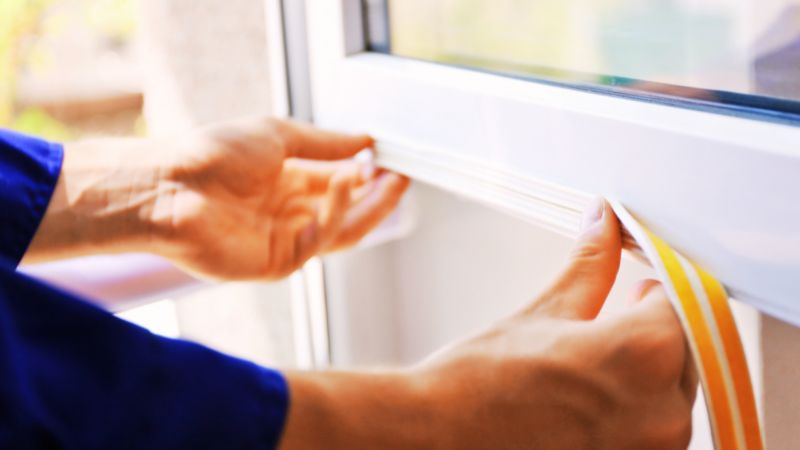
Here’s the best part about air sealing: it has an incredibly high return on investment. The materials are inexpensive, and your in-house maintenance teams can often handle the labor, making it one of the most cost-effective business energy efficiency upgrades you can make.
For example, using commercial-grade caulk and expandable foam to seal penetrations is a low-cost job with immediate benefits. Applying durable weatherstripping to exterior doors and windows across every unit in an apartment complex can add up to huge, cumulative savings. These aren’t just minor fixes; they’re strategic moves that set the stage for all other energy upgrades. To help your team zero in on these problems, you can learn about using a smoke puffer to identify air leaks, a simple but powerful diagnostic tool.
Choosing the Right Insulation for Large-Scale Applications
While air sealing stops the drafts, insulation is what slows the transfer of heat right through your walls and roof. The effectiveness of any insulation is measured by its R-value—the higher the number, the better it resists heat flow.
For commercial properties, choosing the right R-value isn’t just a suggestion; it’s often required by the International Energy Conservation Code (IECC) for your specific climate zone.
When you’re selecting insulation for a big project, consider these factors:
- Application Area: Attics and roofs need higher R-values (R-38 to R-60) than walls (R-13 to R-21), because most heat is lost upward. It’s just basic physics.
- Insulation Type: You’ve got options like fiberglass batts, blown-in cellulose, or rigid foam board. Each has a different R-value per inch and specific installation needs. Blown-in insulation, for instance, is often perfect for retrofitting large, enclosed cavities without tearing out walls.
- Cost vs. Performance: Sure, higher R-value insulation might cost more upfront. But it delivers far greater long-term savings, a crucial calculation for any facility manager’s budget.
Focusing first on air sealing and then on proper insulation is the most logical and financially sound sequence. By tightening up the “bucket” before you upgrade the expensive mechanical systems that fill it, you make sure every dollar spent on heating and cooling delivers its maximum value. For your bulk procurement needs, Conservation Mart offers a full range of commercial-grade weatherstripping, caulk, and insulation solutions.
High-Impact HVAC and Water Heating Upgrades
While sealing up your building’s shell is a critical first step, the real heavy hitters on your property’s utility bill are always the HVAC and water heating systems. For purchasing managers and facility directors, this is where the action is. Upgrading these mechanical systems is the single biggest move you can make to slash operating costs and protect your assets from unpredictable energy prices.
This is where making a strategic shift away from old-school gas-fired or electric resistance units pays off in a big way. Modern, high-efficiency heat pump technology is no longer a niche product; it’s a powerful business decision that delivers major energy and emissions cuts that go straight to your bottom line.
The All-in-One Power of Air-Source Heat Pumps
Imagine one piece of equipment that handles both your heating in the winter and your cooling in the summer, and does both more efficiently than your old systems. That’s a heat pump. Instead of generating heat by burning fuel or running a super-hot electric coil, a heat pump simply moves heat from one place to another.
In the summer, it works exactly like a standard air conditioner, pulling heat from inside your building and dumping it outside. In the winter, it just reverses the process. It pulls warmth out of the outside air—yes, even when it’s cold out—and moves it inside. This process of transferring heat is just far more efficient than creating it from scratch.
For a commercial portfolio, transitioning to heat pumps is not just an equipment swap; it’s a strategic move toward electrification and long-term cost control. This single upgrade can replace separate, aging heating and cooling systems, simplifying maintenance and standardizing equipment across properties.
The numbers don’t lie. Shifting commercial buildings to high-efficiency air-source heat pumps from gas-fired or electric resistance units can cut average energy use by 10% and greenhouse gas emissions by 9%. The savings get even better when replacing specific fuel types—expect a 17% energy reduction when moving off natural gas, and up to 50% when replacing fuel oil or propane systems. You can read more about these electrification trends and their impact to get the full picture.
Building the Business Case for Heat Pump Water Heaters
That same brilliant technology can be used for water heating, another massive energy hog in multi-family and commercial buildings like hotels, apartment complexes, and gyms. A heat pump water heater (HPWH) works by grabbing warmth from the surrounding air and transferring it into the water tank.
This makes them incredibly efficient. We’re talking about 60% savings over standard electric resistance water heaters. For a multi-family building, that can translate to thousands in savings every year. When you multiply that across a portfolio of properties, the business case makes itself.
And when you’re making these high-impact upgrades, don’t forget the brains of the operation. Modern smart thermostats can unlock even more savings. For property managers, figuring out how to deploy and manage these controls at scale is key. You can explore some specific smart energy wins for landlords to see how this plays out in a multi-unit setting.
HVAC System Upgrade ROI Comparison
Making the right HVAC choice is a major capital decision. The upfront cost for a heat pump might be higher than a traditional furnace or AC unit, but you have to look at the total cost of ownership (TCO) and long-term ROI. The table below lays out the comparison to help shape your procurement strategy.
| System Type | Average Energy Savings vs Gas | Average Energy Savings vs Electric Resistance | Ideal Commercial Application |
|---|---|---|---|
| High-Efficiency Heat Pump | 15-40% reduction in heating costs | 50%+ reduction in heating costs | Hotels, office buildings, and multi-family units in mixed climates needing both heating and cooling. |
| Traditional Gas Furnace | Baseline (0% savings) | N/A | Older buildings in cold climates where gas infrastructure is already established. |
| Electric Resistance Heat | N/A | Baseline (0% savings) | Supplemental heating in small, well-insulated spaces or as a backup; generally inefficient as a primary source. |
This table makes it pretty clear. While traditional systems have their place, the financial and environmental benefits of heat pumps are hard to ignore.
For any business serious about sustainability and its long-term financial health, these high-impact business energy efficiency upgrades are core to a modern asset management plan. The switch to efficient electric systems like heat pumps is a clear path to lower overhead, reduced emissions, and a healthier bottom line.
Quick ROI Upgrades: Smart Controls and LED Lighting
When you’re looking for the biggest bang for your buck in energy upgrades, some projects just get you there faster. While big jobs like sealing up a building’s envelope or overhauling the HVAC system are fantastic for deep, long-term savings, they take time. If you want to see a difference on your very next utility bill, you need to think about quick wins.
For property and facility managers, the quickest return on investment almost always comes from two places: smart controls and modern lighting. Think of these as the low-hanging fruit of energy management. We’re talking about simple upgrades that pay for themselves—fast. One of the best places to start is with the best smart thermostats.
Automate Your Savings with Smart Thermostats
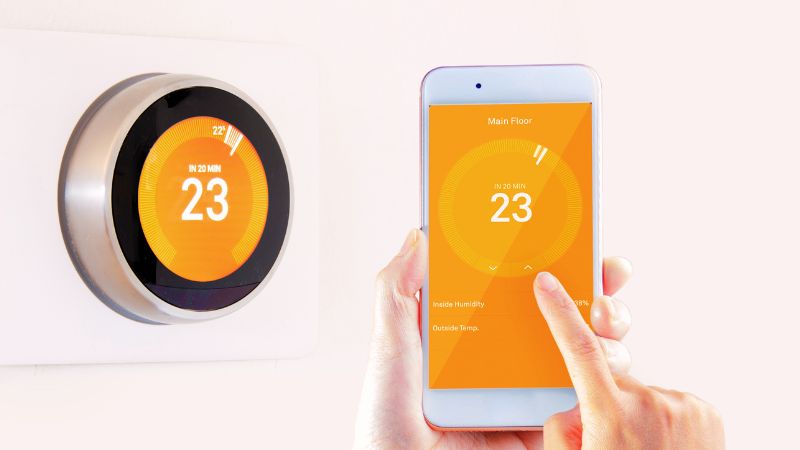
Imagine you’re managing a portfolio of rental units, dorms, or offices. How much money is wasted when a tenant cranks the heat while a window is open? Or when an entire office floor is air-conditioned over a long, empty weekend? These are the exact kinds of energy drains that smart thermostats are designed to stop.
This isn’t just about convenience. It’s about enforcing some energy discipline across dozens or even hundreds of spaces without having to be there yourself.
For a portfolio manager, the benefits start stacking up immediately:
- Stop Energy Waste: You can set temperature limits and create automated schedules. No more tenants setting the AC to 60 degrees or the heat to 85.
- Fewer Maintenance Calls: By keeping temperatures consistent and preventing the system from running needlessly, you reduce the wear and tear on your expensive HVAC equipment.
- Happier Occupants: A stable, comfortable temperature means fewer complaints. That translates to better tenant retention and overall satisfaction.
When you scale this across an entire apartment building or a commercial campus, the savings really take off. You’re no longer just saving one household’s energy; you’re optimizing the performance of a whole asset. The payback period for this kind of project is often under two years.
If you’re managing a larger portfolio and need a solution that can scale, our guide on choosing an affordable smart thermostat is a great resource.
The No-Brainer ROI of an LED Lighting Retrofit
If smart thermostats are the brains of your efficiency upgrade, then a commercial LED retrofit is the single fastest way to slash your operating costs. The business case for this is incredibly strong, and it’s not just about energy savings. It’s also about cutting down maintenance, which is a huge deal for any facility manager.
Let’s be honest: traditional fluorescent and incandescent bulbs are a headache. They’re inefficient, burn out quickly, and require constant labor to replace—especially in tough-to-reach spots like high ceilings, stairwells, or parking garages. An LED retrofit solves all of these problems at once.
Why an LED Upgrade Pays for Itself
- Massive Energy Savings: LEDs use 50-75% less energy than older bulbs. For a space that needs to be lit 24/7, like a hospital corridor or apartment hallway, the savings are instant and huge.
- Drastically Reduced Maintenance: Good quality LED bulbs can last 15-25 times longer than the old ones. This practically gets rid of the endless cycle of buying, storing, and installing replacements, freeing up your maintenance crew for more important work.
- Better Light, Better Safety: LEDs produce a much better, more consistent quality of light. This improves safety in common areas and makes office spaces feel more professional and modern.
Recent analysis backs this up, showing smart thermostats as a top-tier energy-efficient improvement. The numbers are clear: you can see savings of up to 26% on heating and cooling bills. When you pair that with an LED lighting upgrade, which can save hundreds of dollars per unit each year, the financial impact is undeniable.
At Conservation Mart, we specialize in supplying commercial-grade LED solutions and smart thermostats that are perfect for large-scale projects and kitting programs, making sure you get the fastest possible return on your investment.
Developing Your Phased Retrofit Strategy
A real energy efficiency initiative isn’t a one-and-done project; it’s a smart, multi-year plan. For anyone managing property portfolios or a business, tackling energy efficiency upgrades with a phased strategy is the key to maximizing your return while keeping day-to-day operations smooth. It’s all about making smart, sequential improvements that build on each other.
The core idea is simple: start with the low-cost, high-impact jobs first. The savings you generate from these early wins can then be rolled over to fund the more expensive, capital-intensive upgrades down the road. It’s a self-funding cycle of improvement that makes even large-scale retrofits financially manageable.
Starting with a Commercial Energy Audit
Before you can draw a map, you have to know your starting point. The first step is a basic commercial energy audit to figure out where your properties are bleeding the most energy. This doesn’t have to be a complicated or expensive process, either.
You can get started with a simple walkthrough audit. This just means doing a systematic inspection of your building to spot the obvious sources of energy waste. Use this checklist as a guide for your in-house maintenance teams:
- Identify Air Leaks: Check for drafts around all windows, doors, and any spots where plumbing or electrical conduits penetrate exterior walls.
- Inspect Insulation Levels: Take a look at the insulation in your attics and crawl spaces. Is it damaged, settled, or just not enough?
- Review Lighting Systems: Are you still running old fluorescent or incandescent bulbs in common areas, offices, or parking garages?
- Check HVAC Equipment: Note the age and general condition of your heating and cooling units. Listen for strange noises or any signs of strain.
- Assess Water Heaters: Document the type and age of the water heaters, especially for multi-family or hospitality properties where they work hard.
An energy audit isn’t just about finding problems; it’s about prioritizing opportunities. By seeing exactly where your energy dollars are going, you can build a data-driven case for where to invest first to get the quickest and biggest returns.
For a more detailed analysis, you can bring in a certified energy auditor. This written report they provide becomes the foundation of your long-term plan.
This simple flow shows how prioritizing quick-win upgrades like smart controls and LED lighting can rapidly generate savings to fund your next project.
By hitting these low-hanging-fruit upgrades first, you create a positive cash flow that can be plowed right back into the bigger, more complex retrofits.
The Logical Upgrade Sequence
Once your audit has flagged the key weak points, the next step is to sequence your upgrades logically. Think of it like fixing a leaky bucket: you plug the holes first before you worry about finding a more efficient way to fill it.
- Phase 1 Quick Wins (Months 1-6): Go for the fastest ROI. This means a full-court press on air sealing with caulk and weatherstripping and a complete LED lighting retrofit. Your in-house team can probably handle these jobs, which maximizes your labor savings.
- Phase 2 System Controls (Months 6-12): Now, use those initial savings to get smarter. Install programmable or smart thermostats to automate your HVAC savings and add thermostatic radiator valves (TRVs) to balance out heat in older hydronic systems.
- Phase 3 Major Mechanicals (Years 2-5): With the easy wins banked, it’s time to tackle the big-ticket items. Because you’ve already tightened up the building envelope and added smarter controls, you can often install smaller, less expensive HVAC systems. This is the time to finally replace those aging furnaces and water heaters with high-efficiency heat pump models.
This phased approach makes the whole process far more affordable. It also ensures every upgrade works together for the biggest possible impact.
In-House Teams vs Specialized Contractors
One of the biggest calls to make in your retrofit strategy is deciding who will do the work. The choice between using your own maintenance crews and hiring outside contractors comes down to the job’s complexity and your team’s skillset.
Tasks for In-House Maintenance Teams:
- LED lighting installation
- Applying weatherstripping and caulk
- Installing most smart thermostats
- Replacing faucet aerators and showerheads
When to Hire Specialized Contractors:
- Full HVAC system replacement
- Injecting insulation into wall cavities
- Complex electrical work
- Window and door replacement
Using your in-house team for the simpler tasks is a fantastic way to keep costs down. For the complex jobs, though, a specialized contractor ensures the work is done safely, meets code, and actually performs the way it’s supposed to. This hybrid approach lets you build a practical, budget-conscious roadmap to improve your entire portfolio’s performance, one step at a time.
Executing Your Upgrade Plan with Conservation Mart
You’ve got a solid strategy and you know where the savings are hiding—now it’s time to get to work. A successful portfolio-wide retrofit all comes down to following a logical sequence. The main takeaway is this: start with the building envelope, then upgrade to efficient electric systems, and finally, add smart controls to lock in your savings.
This phased approach makes sure every dollar you invest builds on the last one. More importantly, this is where Conservation Mart becomes your go-to procurement partner, helping you get the right gear for your projects to maximize savings and efficiency. We’re built to serve businesses and organizations taking on these exact kinds of large-scale jobs.
Your B2B Partner for Scalable Upgrades
If you’re an energy auditor, contractor, or facility manager, you know that getting the right products in the right quantities is absolutely critical. We help you move beyond single-unit purchases to meet the real demands of portfolio-wide retrofits.
As a business, your bottom line is about ROI, operational efficiency, and solutions that can scale. Conservation Mart is set up to support those goals. We provide commercial-grade products and purchasing options designed for big energy efficiency upgrades, not one-off retail projects.
We get that a 200-unit apartment complex has totally different procurement needs than a single residential property. That’s why we offer solutions built for your professional requirements.
Procurement Solutions for Professionals
We offer a few key advantages for our business and utility partners:
- Bulk Purchasing Options: Get the commercial-grade weatherization, lighting, and water-saving products you need, at volumes that make financial sense for large projects.
- Pre-Assembled Conservation Kits: We specialize in creating custom, pre-assembled kits perfect for utility programs and large-scale deployments. To see just how much these kits simplify distribution and installation, check out our guide on energy conservation kit installation.
- Comprehensive Commercial Catalog: Our inventory is stocked with everything from thermostatic radiator valves and smart thermostats to a huge array of LED lighting solutions. Everything is selected for durability and performance in commercial settings.
Whether you’re retrofitting a school district or upgrading an entire multi-family portfolio, our goal is to be the supply partner that makes your job easier. We invite you to explore our site or get in touch with a sales representative to talk about how we can equip your next project. Let’s turn that plan into real, measurable results.
Frequently Asked Questions About Commercial Energy Upgrades
Taking on energy upgrades for a business is one thing, but scaling those efforts across a commercial portfolio is a whole different ballgame. Big projects bring big questions, and facility managers, contractors, and property owners need practical, business-focused answers. Here are a few of the most common questions we get from professionals in the field.
What Is the Best First Step for a Business with Multiple Properties?
When you’re managing a whole portfolio, you need to find the low-hanging fruit first. Start with a portfolio-wide energy audit to pinpoint your worst-performing buildings—the ones hemorrhaging the most cash on utilities.
For an immediate, low-cost win, roll out an LED lighting retrofit across all your properties. The ROI is incredibly fast, and it causes almost no disruption to your daily operations. At the same time, get your maintenance teams busy with basic air sealing, like caulking and weatherstripping. These are foundational, low-capital steps that deliver real savings you can then roll into bigger projects.
How Do I Justify the High Upfront Cost of an HVAC Heat Pump Retrofit?
It’s crucial to look beyond the initial price tag and focus on the Total Cost of Ownership (TCO). When you build the business case, make sure to highlight the projected annual energy savings, which can be anywhere from 10% to 50%. Don’t forget to factor in the drastically lower maintenance costs and any government rebates or tax credits you can claim.
Think of it as a strategic investment. You’re not just buying a new HVAC system; you’re hedging against unpredictable energy prices and hitting corporate sustainability (ESG) goals. A modernized building also boosts your brand’s reputation, which is a powerful magnet for attracting and retaining tenants and customers.
Can My In-House Maintenance Team Handle These Upgrades?
For sure. Your in-house crew is perfectly suited for a lot of high-impact, low-complexity jobs. This is where you can really save on labor costs. They can typically handle:
- Installing LED lighting
- Applying weatherstripping and caulk to seal up air leaks
- Putting in most smart thermostats and controls
For the more complex stuff, like a full HVAC system replacement or injecting insulation into wall cavities, it’s best to call in the specialists. Partnering with experienced contractors ensures the job is done safely, up to code, and performing at its best.
At Conservation Mart, LLC, we’re here to be the procurement partner for businesses just like yours. Whether you need bulk orders of weatherization materials or pre-assembled conservation kits for a large-scale rollout, we have the commercial-grade products and the know-how to help you get your project done right. Check out our resources and product catalog at https://blog.conservationmart.com.